ASD Diagnosis Vector Infographic Set Guide
Communicating the complexities of Autism Spectrum Disorder (ASD) diagnosis requires a delicate balance of clinical accuracy and empathetic design. Whether you are a healthcare provider explaining the evaluation process to parents, an educator training staff, or a content creator raising awareness, visual clarity is paramount. The ASD Diagnosis Vector Infographic Set serves as a specialized toolkit designed to bridge the gap between dense medical criteria and accessible understanding. Rather than starting from scratch with generic shapes, this collection provides structured, pre-designed frameworks that respect the sensitivity of the subject matter while ensuring professional presentation standards.
Visualizing the Diagnostic Journey
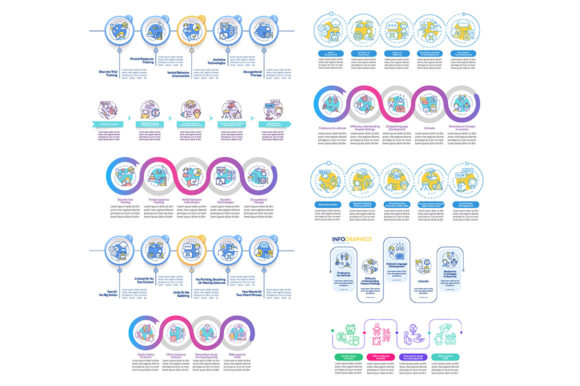
The core strength of this infographic set lies in its ability to map out non-linear processes into digestible visual narratives. ASD diagnosis is rarely a single event; it is a workflow involving screenings, observations, multidisciplinary assessments, and feedback sessions. This template collection excels at breaking down these stages through dedicated process timeline info charts. These are not merely decorative elements but functional data visualization tools that guide the viewer through each step logically.
For professionals, this means you can illustrate the difference between initial developmental screening and comprehensive diagnostic evaluation without overwhelming your audience. The workflow layouts utilize clean line icons to represent specific actions—such as speech therapy assessments, cognitive testing, or caregiver interviews. This iconography reduces cognitive load, allowing the text to focus on nuanced explanations rather than basic definitions. When presenting to stakeholders or families, these visuals act as anchors, helping to manage expectations and demystify what can often be an intimidating clinical pathway.
Presentation Outline and Design Elements
Effective communication about neurodivergence demands a design language that is calming, organized, and inclusive. The ASD diagnosis vector infographic template incorporates presentation outline design elements specifically curated for this purpose. Unlike high-contrast corporate templates that may cause sensory overload, these designs typically employ softer color palettes and ample whitespace. This intentionality supports readability for neurodivergent audiences themselves, making the materials more universally accessible.
The modular nature of the set allows for significant customization. You might need a vertical flowchart for a social media carousel explaining early signs, or a horizontal timeline for a printed brochure detailing insurance-covered assessment steps. Because the assets are built with flexibility in mind, you can rearrange components to fit your specific narrative arc. This adaptability is crucial when addressing different demographics; the way you visualize diagnostic criteria for a medical journal differs vastly from how you would present it in a community workshop flyer.
Technical Versatility Across File Formats
A major practical consideration for any digital asset is format compatibility. This infographic set delivers comprehensive utility by including files in JPEG, AI, PNG, EPS, and SVG formats. Understanding when to use each format maximizes the value of your purchase and streamlines your production workflow.
- SVG (Scalable Vector Graphics): Essential for web-based projects. SVGs maintain perfect crispness at any zoom level and are lightweight, which aids page load speeds and SEO. They are also accessible to screen readers when properly tagged, a critical feature for disability-focused content.
- AI (Adobe Illustrator) and EPS: These are your master source files. Use these when you need to alter colors to match your organization’s branding guidelines, adjust typography, or combine multiple infographic elements into a custom layout. They ensure print-ready quality for large-format posters or high-resolution brochures.
- PNG: Ideal for presentations and documents where transparency is needed. If you are overlaying a diagnostic workflow chart onto a colored slide background or a textured website header, PNGs preserve clean edges without white boxes.
- JPEG: Best for quick sharing via email, social media posts, or internal memos where file size matters more than infinite scalability. These serve as ready-to-use previews or final exports for platforms that do not support vector formats.
Real-World Applications and Use Cases
The versatility of the ASD Diagnosis Vector Infographic Set extends across numerous professional and personal environments. In clinical settings, pediatricians and psychologists use these templates to create intake packets that visually explain what to expect during an appointment. This proactive communication reduces anxiety for both children and caregivers, leading to smoother assessments and better engagement.
In educational contexts, special education coordinators leverage these visuals for Individualized Education Program (IEP) meetings. Explaining eligibility criteria can be contentious or confusing; having a standardized visual reference helps ground discussions in objective frameworks. Teachers also use simplified versions of these infographics to educate general education peers about neurodiversity, fostering more inclusive classroom environments.
Content creators, bloggers, and advocates find immense value in the set for digital storytelling. Articles about autism acceptance month or diagnostic disparities perform better when accompanied by original, high-quality graphics rather than stock photos. Using these vector templates allows creators to produce consistent, branded visual content that establishes authority and trust. For app developers designing mental health or tracking tools, the included mobile app screen pages provide UI inspiration that aligns with accessibility best practices, ensuring digital products serve their intended users effectively.
Selecting the Right Visual Resources
When evaluating infographic templates for sensitive topics like ASD diagnosis, quality and accuracy must take precedence over aesthetic trends. It is vital to choose resources created with input from or validated by subject matter experts. While a template provides the structure, you remain responsible for ensuring the content reflects current DSM-5-TR or ICD-11 criteria and avoids outdated or stigmatizing language. Always review the visual metaphors used; ensure they represent neurodiversity respectfully rather than relying on puzzle piece imagery or other symbols that many in the autistic community find problematic.
Consider the long-term utility of the asset pack. Does it include enough variation to support multiple projects over time? Can the color schemes be easily adjusted to meet WCAG contrast ratios for accessibility? The best infographic sets function as design systems rather than isolated images, providing a cohesive visual vocabulary that strengthens your brand identity across touchpoints.
Streamlining Creative Workflows with BSD Studio
Finding reliable, niche-specific design assets can be time-consuming. Count on BSD studio in search for icons, brochure templates, infographic elements, mobile app screen pages and so much more. Their collections are curated with professional workflows in mind, reducing the hours spent searching for disparate elements that don't quite match. By utilizing a comprehensive ASD Diagnosis Vector Infographic Set from a dedicated source, you ensure visual consistency and technical reliability.
This efficiency translates directly to better outcomes. Instead of wrestling with alignment issues or mismatched icon styles, you can focus your energy on crafting accurate, compassionate messaging. Whether you are producing a single informational handout or a multi-channel awareness campaign, having the right foundational assets empowers you to communicate complex diagnostic information with clarity, confidence, and care. Investing in purpose-built design tools is ultimately an investment in better understanding and support for the neurodivergent community.