Evaluating the Hair Transplantation Minimal Infographic for Medical Communication
In the field of medical aesthetics and trichology, clear communication is often as critical as the clinical procedure itself. Patients researching hair restoration are frequently overwhelmed by technical jargon and graphic imagery. The Hair Transplantation Minimal Infographic serves as a strategic visual solution designed to bridge the gap between complex surgical concepts and patient understanding. When evaluating visual assets for educational content, web banners, or clinic brochures, understanding the specific utility, format advantages, and appropriate application of these minimal illustrations is essential for making informed design and marketing decisions.
Defining the Minimal Infographic Concept
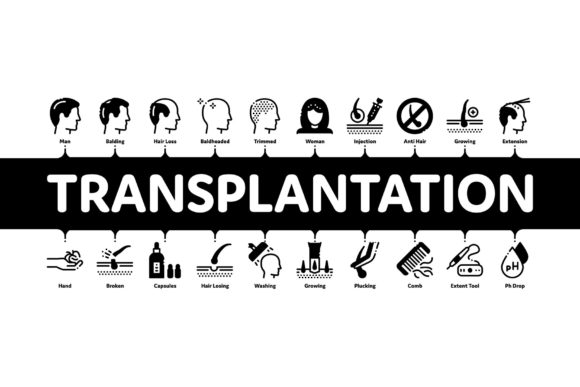
The Hair Transplantation Minimal Infographic is a specialized vector-based illustration set that prioritizes clarity over anatomical hyper-realism. Unlike photographic depictions of surgery, which can be visceral or intimidating, minimal infographics utilize clean lines, flat colors, and simplified geometry to represent the hair restoration process. These assets typically encompass the entire patient journey, featuring iconography for balding patterns, diagnostic tools, shampoo and post-operative care bottles, medicine administration, and the transplantation concept itself.
This design philosophy aligns with modern user experience standards in healthcare, where reducing cognitive load is paramount. By stripping away unnecessary detail, these illustrations allow viewers to focus on the procedural logic and care requirements rather than the biological gore. For clinics and educators, this asset type functions not merely as decoration, but as a functional communication tool that standardizes how information is presented across digital and print platforms.
Strategic Reasons for Selection
Professionals select minimal infographic vectors over other visual styles for several objective reasons rooted in psychology and brand management. The primary driver is patient anxiety reduction. Hair loss is an emotionally charged topic, and surgical intervention can induce significant stress. Soft, minimal visuals create a psychological distance that makes the subject matter approachable without diminishing its seriousness.
Furthermore, these assets offer superior versatility. A Hair Transplantation Minimal Infographic Web Banner Vector is inherently scalable. Because it is vector-based, it can be resized from a small social media icon to a large-format clinic wall decal without pixelation or loss of fidelity. This scalability ensures brand consistency across touchpoints. Additionally, the inclusion of specific elements like shampoo and medicine bottles addresses the holistic nature of hair loss treatment, signaling to patients that the clinic values maintenance and medical therapy alongside surgical options.
Benefits and Practical Advantages
When integrated correctly, minimal infographics provide measurable benefits to content strategy and patient education:
- Enhanced Comprehension: Simplified visuals process faster in the brain than text or complex photos, improving retention of pre- and post-op instructions.
- Cross-Cultural Accessibility: Minimalist iconography transcends language barriers, making it ideal for clinics serving diverse populations or international medical tourism markets.
- Editability: Vector formats (EPS) allow designers to modify colors to match specific clinic branding, adjust composition for different layouts, or isolate individual elements like the balding man head for targeted ads.
- Professional Tone: The aesthetic conveys modernity and precision, attributes that patients subconsciously associate with high-quality medical care.
- Load Speed Optimization: When exported as optimized SVG or lightweight JPG files for web use, these graphics contribute to faster page loads compared to high-resolution photography, supporting SEO performance.
Tradeoffs and Limitations
Despite their advantages, minimal infographics are not universally applicable. Evaluating the tradeoffs is necessary to avoid misalignment with audience expectations. The primary limitation is the lack of realistic expectation setting. While excellent for explaining concepts, minimal art cannot show actual hair density, scar texture, or natural hairline variation. Patients relying solely on these graphics may develop unrealistic expectations regarding surgical outcomes.
Additionally, there is a risk of generic perception. Because minimal vector packs are widely available, multiple clinics may use identical or similar assets. Without customization, a clinic’s branding may appear indistinguishable from competitors. There is also a potential disconnect for highly analytical patients who prefer data-driven evidence over stylized representations. For these individuals, minimal graphics may seem superficial if not paired with substantive clinical data or before-and-after photography.
Situational Fit: When to Use Minimal Vectors
Determining whether the Hair Transplantation Minimal Infographic is the right choice depends on the specific context of communication. These assets are a strong fit in the following scenarios:
- Top-of-Funnel Awareness: Blog posts, landing pages, and social media ads targeting individuals in the early research phase who are not yet ready for graphic surgical details.
- Process Explanation: Step-by-step guides detailing FUE vs. FUT methods, where diagrammatic clarity outweighs photographic realism.
- Post-Operative Care Sheets: Printed or digital handouts instructing patients on washing techniques, medication schedules, and activity restrictions.
- Website Navigation and UI: Icons for service menus, footer links, or interactive consultation tools.
- Presentation Decks: Investor meetings or conference presentations where clean aesthetics support professional credibility.
When Alternatives Are Preferable
Conversely, there are distinct situations where alternatives to minimal infographics should be prioritized. If the goal is to demonstrate surgical mastery or validate results, high-resolution clinical photography is irreplaceable. Patients in the decision-making phase need to see real follicular unit extraction sites and healed donor areas to assess quality.
For academic or peer-to-peer communication, detailed anatomical illustrations or 3D medical renders are more appropriate than minimal vectors, as they convey necessary depth and biological accuracy. Similarly, when addressing severe alopecia or complex reconstructive cases, minimal graphics may trivialize the condition; empathetic, realistic imagery or video testimonials often resonate better in these sensitive contexts. Finally, if a clinic’s brand identity is built on raw authenticity and transparency, polished minimalism might feel incongruent with their core message.
Decision-Making Insights for Implementation
For those considering acquiring or commissioning a Hair Transplantation Minimal Infographic Web Banner Vector, practical evaluation criteria should guide the selection process. First, verify file format availability. Ensure the package includes both EPS (for editing and print) and high-resolution JPG (for immediate web use). Check the layer organization within the EPS file; well-organized layers significantly reduce future design costs and time.
Assess the conceptual completeness of the set. Does it include the full spectrum of relevant icons—balding stages, consultation, surgery, shampoo, medicine, and recovery? A fragmented set may require purchasing additional assets later, leading to style inconsistencies. Evaluate the license terms carefully; some vector licenses restrict usage in commercial advertising or require attribution, which could complicate marketing campaigns.
Finally, consider the integration plan before purchase. These graphics perform best when part of a cohesive visual system. Plan how the color palette will be adapted to your brand guidelines and identify specific pages or materials where each element will be deployed. By treating the Hair Transplantation Minimal Infographic as a strategic component of a broader communication ecosystem rather than a standalone decorative element, organizations can maximize its value in educating patients and building trust in the hair restoration journey.