Evaluating the Stomatology Minimal Infographic Banner for Dental Design Projects
Selecting appropriate visual assets is a critical step in developing effective communication materials for dental practices, educational institutions, and medical publishers. The Stomatology Minimal Infographic Banner represents a specific category of vector-based design resources tailored for clinical and patient-facing environments. When researching or comparing digital assets for stomatology-related projects, understanding the functional scope, technical specifications, and practical applications of this banner style is essential for making an informed procurement decision. This evaluation focuses on how these linear pictograms and contour illustrations serve professional needs beyond mere aesthetics.
Defining the Asset Category and Visual Scope
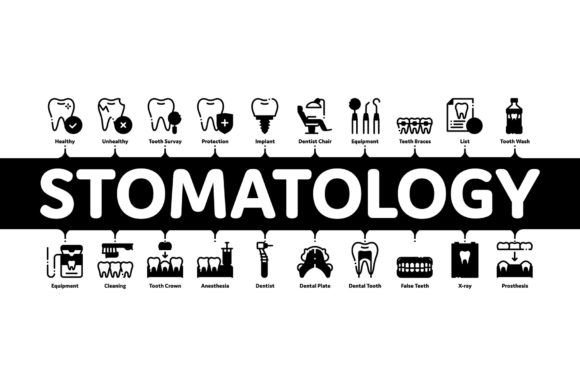
The Stomatology Minimal Infographic Banner is not a singular image but a comprehensive collection of vector elements designed with a unified minimalist aesthetic. These assets typically feature clean line art rather than complex shading or photorealism. Key components often included in this asset type are depictions of dentist equipment and chairs, comparative illustrations of healthy versus unhealthy teeth, jaw and denture anatomy, and procedural icons such as injection anesthesia contours. The "minimal" designation implies a reduction of visual noise, prioritizing clarity and immediate recognition over decorative detail. This stylistic choice is intentional, aiming to reduce patient anxiety and ensure that complex medical concepts are digestible at a glance. For evaluators, it is important to verify that the specific bundle under consideration includes the full range of necessary anatomical and procedural icons, as coverage can vary significantly between different vector packs.
Strategic Reasons for Selection
Professionals typically seek out these specific infographic banners when there is a need to bridge the gap between clinical accuracy and public accessibility. One primary driver is the requirement for scalable web and print consistency. Because these assets are vector-based, they maintain crisp edges whether displayed as a small icon on a mobile appointment booking interface or expanded into a large-format clinic wall decal. Another significant factor is brand alignment. Modern dental practices often strive for a sterile yet welcoming atmosphere; the linear pictogram style supports this by appearing precise and hygienic without being overly graphic or intimidating. Furthermore, content creators evaluating these assets are often looking to expedite production workflows. Utilizing pre-designed, cohesive sets eliminates the time and cost associated with commissioning custom illustrations for every new blog post, brochure, or social media update.
Benefits and Practical Advantages
The utility of the Stomatology Minimal Infographic Web Banner Vector extends across multiple dimensions of dental marketing and education. The most immediate benefit is versatility. Files provided in EPS format allow designers to modify stroke weights, adjust colors to match specific practice branding, and isolate individual elements from the larger banner composition. This editability is crucial for maintaining long-term relevance as design trends evolve. Additionally, the inclusion of both healthy and unhealthy tooth pictograms facilitates direct visual comparison, which is highly effective for patient education regarding hygiene, periodontal disease, or restorative procedures. From a technical standpoint, vector files generally have smaller file sizes compared to high-resolution raster images, contributing to faster page load times on websites where SEO and user experience are priorities. The standardized style also ensures that disparate pieces of content, created months apart, retain a cohesive visual identity.
Tradeoffs and Limitations to Consider
Despite their advantages, minimal infographic banners present certain tradeoffs that must be weighed during the selection process. The primary limitation is anatomical generalization. To achieve a minimal aesthetic, artists often simplify complex structures. While this aids comprehension for lay audiences, it may render the illustrations unsuitable for advanced academic textbooks or surgical training materials where precise anatomical fidelity is mandatory. Evaluators must determine if the level of abstraction aligns with their target audience's expertise. Another consideration is the potential for generic appearance. Because these vector packs are sold as stock assets, there is a risk of visual overlap with other clinics using the same resources. Without customization—such as color grading or combining elements uniquely—the design may lack distinctiveness. Finally, while JPG formats are often included for quick preview or simple use, they lack the scalability of EPS. Relying solely on the JPG version negates the primary value proposition of vector art, so users must ensure they have access to compatible editing software like Adobe Illustrator or CorelDRAW to fully leverage the asset.
Situational Fit: When This Asset Aligns with Goals
The Stomatology Minimal Infographic Banner is particularly well-suited for specific operational contexts. It is an optimal choice for general dentistry websites focusing on preventative care, cosmetic consultations, and pediatric dentistry, where approachability is paramount. Marketing teams producing high-volume social media content will find the modular nature of these vectors invaluable for creating consistent carousels and stories. Educational platforms targeting K-12 health curricula or basic community health outreach also benefit from the simplified visual language. Additionally, administrative uses, such as internal signage for sterilization protocols or patient intake forms, represent a strong fit where functional clarity outweighs artistic expression. In these scenarios, the balance of professional tone and visual simplicity directly supports organizational objectives.
When Alternatives Are Worth Considering
Evaluators should explore alternative visual solutions when project requirements diverge from the capabilities of minimal linear art. If the goal is to showcase the premium quality of a luxury dental spa, photorealistic imagery or 3D rendering may better convey texture, lighting, and ambiance. For specialized oral surgery or orthodontic research publications, medically accurate, detailed plate illustrations are necessary to avoid misrepresentation. Similarly, if a practice has a highly unique brand identity that deviates significantly from standard medical blue-and-white palettes, custom-commissioned illustration may provide a better return on investment despite higher upfront costs. Interactive 3D models may also be superior for patient consultation software where users need to rotate and explore anatomy dynamically. Recognizing these boundaries prevents the misapplication of minimal infographic assets in contexts demanding higher fidelity or interactivity.
Decision-Making Framework for Procurement
To determine whether a specific Stomatology Minimal Infographic Banner meets your needs, apply a structured evaluation checklist. First, audit the icon inventory against your content calendar for the next twelve months; ensure critical items like anesthesia contours and denture diagrams are present to avoid future piecemeal purchases. Second, test the EPS files in your intended workflow to confirm layer organization and ease of recoloring. Poorly organized vectors can negate time-saving benefits. Third, review licensing terms carefully to confirm permissions for commercial web use, print distribution, and potential modification. Fourth, assess the line weight consistency; inconsistent stroke widths can appear unprofessional when scaled. Finally, compare the cost per usable element rather than the total package price. A cheaper pack with fifty irrelevant icons may offer less value than a slightly more expensive set containing twenty perfectly aligned assets. By systematically evaluating these factors, stakeholders can select visual resources that effectively support their stomatology communication goals while respecting budget and technical constraints.